
Standard or Conventional Eggs
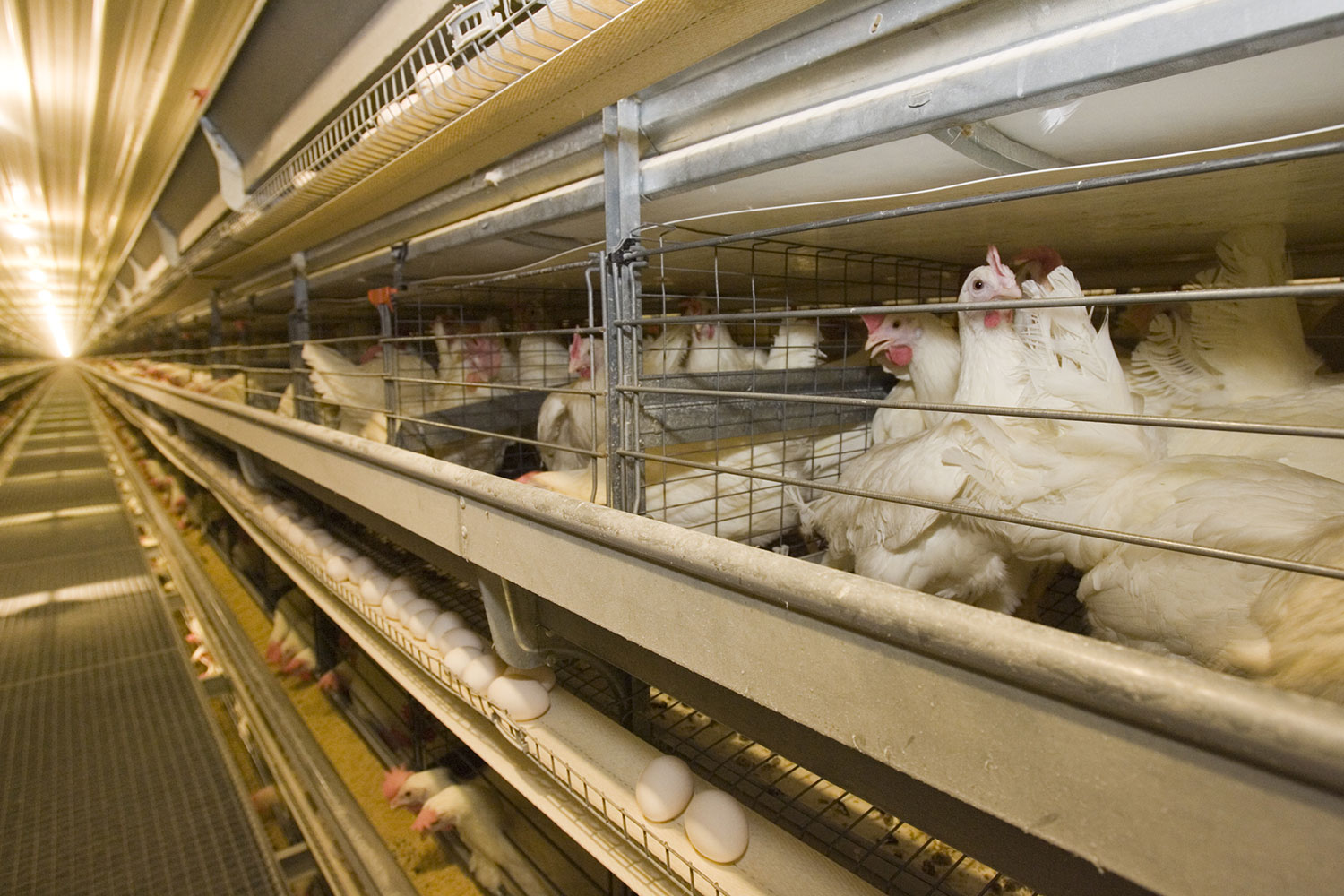
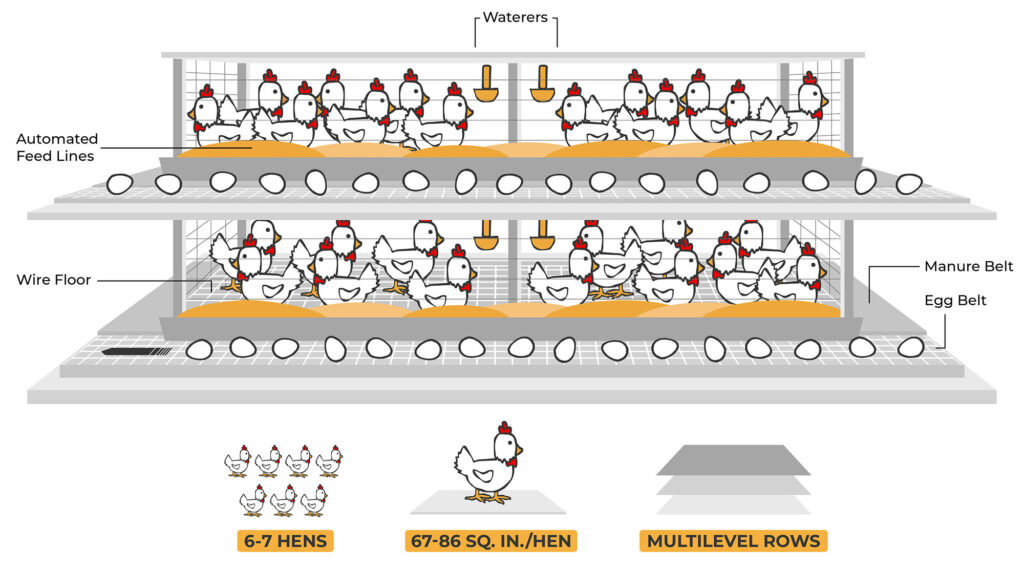
Conventional eggs are the standard eggs you find on the grocery shelf that are simply labeled “eggs”—usually with a grade AA, A or B and a size like large or jumbo. These eggs come from hens that are raised in cages. Keeping hens in cages in temperature-controlled barns protects them from extreme heat and cold and stormy weather, as well as from typical predators, like foxes, weasels, and hawks. Cages improve hen-house sanitation, make it easier to monitor each hen’s health, and prevent the hens pecking each other,23,24 which is a natural social behavior that can lead to injury. Caged housing also makes egg collection much more efficient. For these reasons, the lowest-priced eggs typically come from farms that use this method. Cages don’t allow hens to really spread their wings or move around a lot and hens in this kind of housing system don’t have access to the outdoors.
- Learn more about standard or conventional eggs
-
About 55% of commercial egg farming in the U.S. relies on caged housing environments.25 The huge increase in egg productivity that caged housing made possible is what allowed America’s egg farmers to feed a booming population that grew from 138 million people in 1944 to 328 million in 2019. During that same 75 years, farmers increased egg production by more than 85%—from nearly 52 billion eggs in 1944 to more than 96 billion eggs in 2019.26 Specific standards for caged hen housing are set by third-party certification programs and by state laws. More than 90% of U.S. egg production falls under a United Egg Producers (UEP) certification program. UEP certification for conventional housing specifies 6-7 hens per cage and 67-86 sq inches per hen.27