
Pasture-Raised Eggs
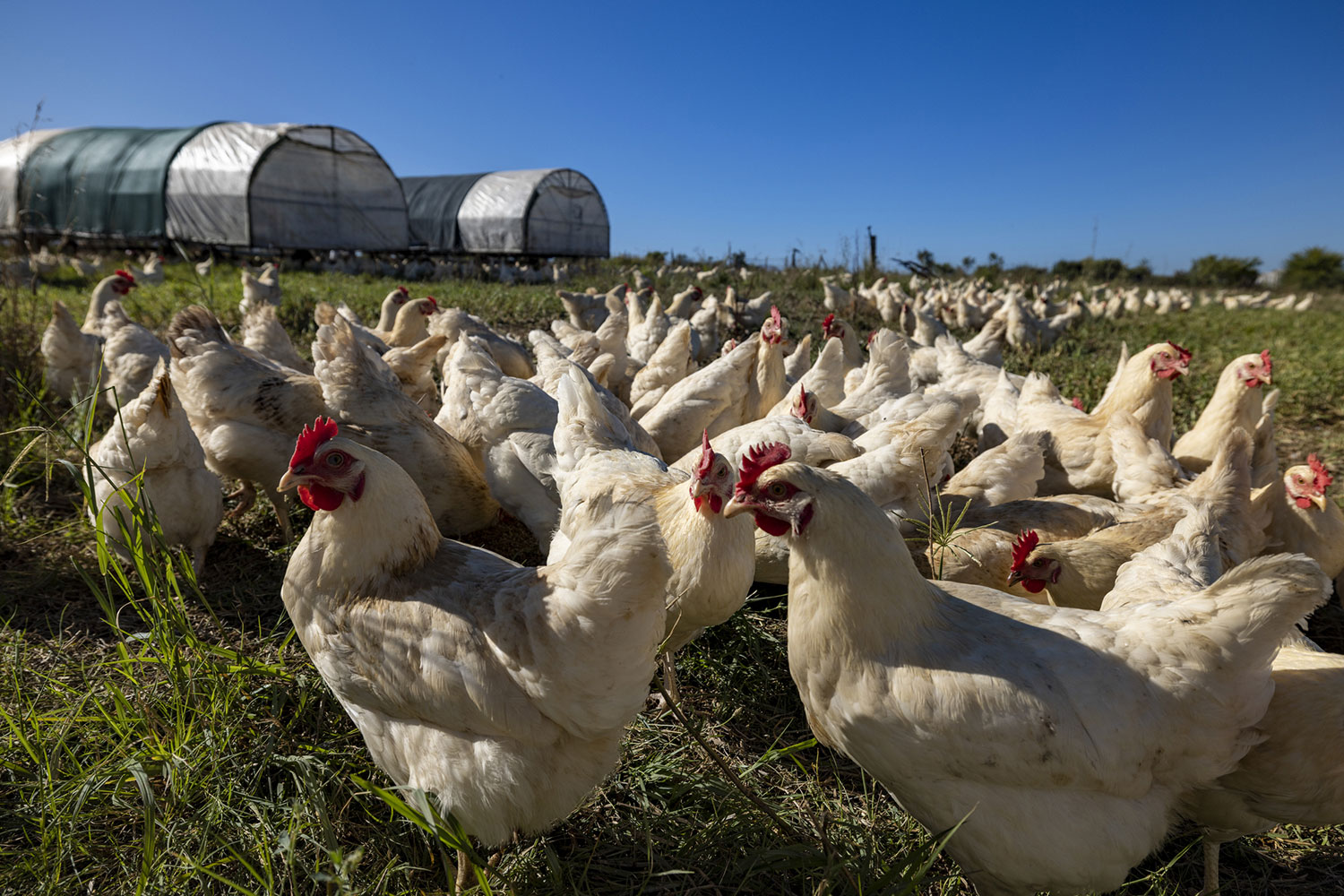
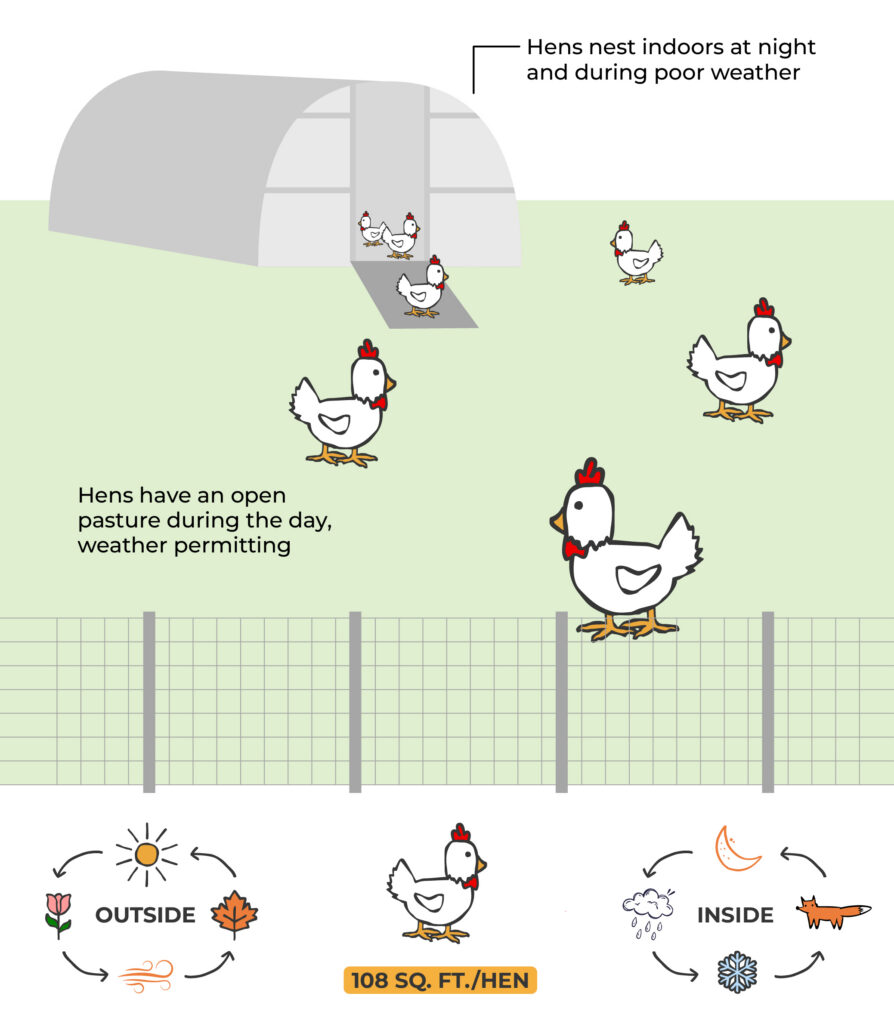
The USDA doesn’t currently have guidelines for pasture-raised production. Generally, pasture-raised eggs are laid by hens who can roam and forage on a maintained pasture during the day and who shelter indoors at night and during inclement weather. Shelter can be either a stationary coop or barn, or a mobile shelter.
Pasture-raised hens tend to have the most space of any housing environment, though they’re more susceptible to predators, like foxes, weasels, and hawks. Pasture-raised hens are typically fed a diet of chicken feed—often organic—but they can have a more diverse diet supplemented by foraging for bugs and plants.
Pasture-raised eggs tend to cost more because this housing environment is more labor intensive and requires more land, with a lower volume of eggs produced per flock and a significant loss of birds due to predators.
- Learn more about pasture-raised eggs
-
Though the USDA doesn’t have guidelines for pasture-raised production, Certified Humane® “Pasture Raised” specifies 108 sq. ft. per bird.31 The hens must be outdoors year-round, with mobile or fixed housing where the hens can go inside at night, or for up to two weeks out of the year due only to very inclement weather.