
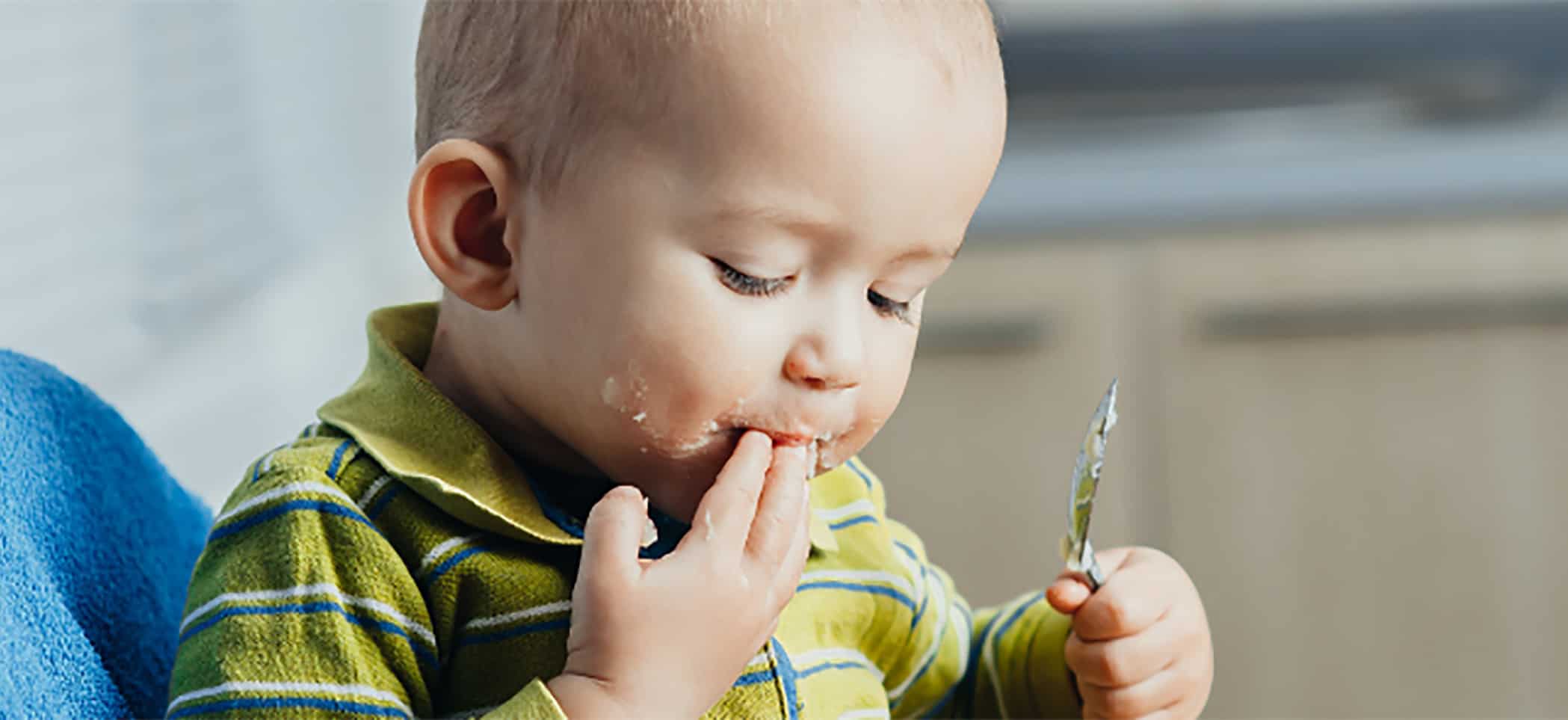
It is estimated that up to 8% of children may have a food allergy.1 Some children will outgrow their food allergy, but others will have food allergies for a lifetime. Fortunately, research shows that early introduction of peanut and egg may significantly reduce the risk of developing an allergy to each of these foods.2
What Does the Science Say?
The LEAP (Learning Early About Peanut Allergies) study showed that early introduction of peanut foods, starting around 4-6 months, may reduce peanut allergies by up to 86%.3 The EAT (Enquiring About Tolerance) study showed that introducing six common allergens to babies with no known risk was safe and, in babies who were fed according to the recommended intervention (per protocol), risk of developing peanut and egg allergies was reduced.4
What are the Generally Accepted Risk Factors for Developing Food Allergies?
- Severe eczema
- Existing food allergy
- Family history of atopy (e.g. atopic dermatitis, allergic rhinitis, asthma, food allergy, etc.).
If your patient/client has any of these risk factors, refer to pediatrician or allergist to begin introduction of potential allergens, especially peanut, between 4-6 months. 3,7
When Should Parents and Caregivers Introduce Potential Food Allergens?
The NIAID recommends introducing peanut foods around 4-6 months, based on individual risk.5 Babies with the aforementioned risk factors may require pre-screening or an in-office first introduction. All other potential allergens should be introduced around 6 months of age, depending on a child’s specific risk factors. Evidence does not support withholding allergens to prevent food allergies.2,6
How Should Potential Food Allergens Be Fed to Infants?
All foods should be fed to a baby in a form appropriate to their development and under caregiver supervision.2 Purees, thinned pastes, and well-cooked and soft forms are just a few ways to easily introduce any food. Once successfully introduced, potential allergens should continue to be fed.
Tips for Introduction4
- Feed when baby is healthy with no fever or signs of illness.
- Introduce new foods early in the day before a nap, so you can observe for 2 hours.
- Wait 2 to 3 days between introducing a new potential allergen.
- Try a small amount of food on the tip of a spoon. Wait 10 minutes and feed more if there are no signs of a reaction with the goal of 2 teaspoons of the allergen.
- Stop feeding baby and seek medical care if signs of a reaction are seen: hives, vomiting, coughing, swelling of the mouth, wheezing, lethargy.
Early Introduction: What’s on the Menu?
Here are some ideas for safely feeding baby:
- Peanut butter thinned with breastmilk or formula
- Mashed, cooked egg yolk with infant cereal
- Baked muffin with egg and peanut butter
- Once baby has successfully enjoyed peanut and egg separately, check out these four simple recipes to introduce eggs and peanut butter to infants.
Where Can I Learn More about Introducing Potential Allergens?
For introducing all allergens: babysfirst.org
To easily share information with your patients and clients, check out our Food Allergy Parent Guide.
References
1. Gupta RS et al. Pediatrics 2018 142(6):e20181235
2. Greer FR et al. Pediatrics 2019;143(4):320190281
3. Du Toit G, N Engl J Med. 2015;372:803-813.
4. Perkin M, et al. N Engl J Med. 2016;374:1733-1743.
5. NIAID Addendum Guidelines for the Prevention of Peanut Allergy
in the U.S. 2018. Appendix D
6. Obbagy et al. Am J clin Nutr 2019;109(Suppl):890S-934S.
7. Perkin et al J Allergy Clin Immunol. 2019; 144 (6)