
In a perfect world, our calendars would be wide open for quiet relaxation, energizing workouts, and quality time with the people we love. But real life is busy, and taking care of ourselves can easily fall to the bottom of the day’s to-do list.
The good news is you don’t need a complete lifestyle overhaul to feel stronger. Small, simple choices can add up in a big way; even taking one step a day in the right direction can make a difference. And one of the easiest, most accessible steps you can take starts right in your kitchen.
If you’re short on time but still committed to making smart choices, you’re in the right place. Here are four tips to help you eat healthy, even when you’re in a hurry.
Tip #1: Care for your whole body, including your brain
Maintaining healthy muscles isn’t just for fitness goals. Muscle is the organ of health and longevity and high-quality fuel from high-quality protein, like eggs, is important for sustaining muscle and supporting bone health throughout life.1,2 What’s more is that emerging research even suggests that muscle health and brain function are connected,3 with physical activity playing a role in supporting cognitive function and mental well-being!4
When you choose to eat eggs, you’re not just feeding your body, you’re feeding your brain, too. Eggs are one of the highest sources of choline in the American diet — a nutrient that helps support brain health at every stage of life1,5 including brain development, memory and mood.6 In fact, 90% of Americans don’t get enough choline.7 Eating two-eggs any time of day provides 50-70% of your daily choline requirement.1
Whether it’s your brain or your body, eggs offer nutritional support from head to toe.
Tip #2: Stock up for the week by batch-prepping meals

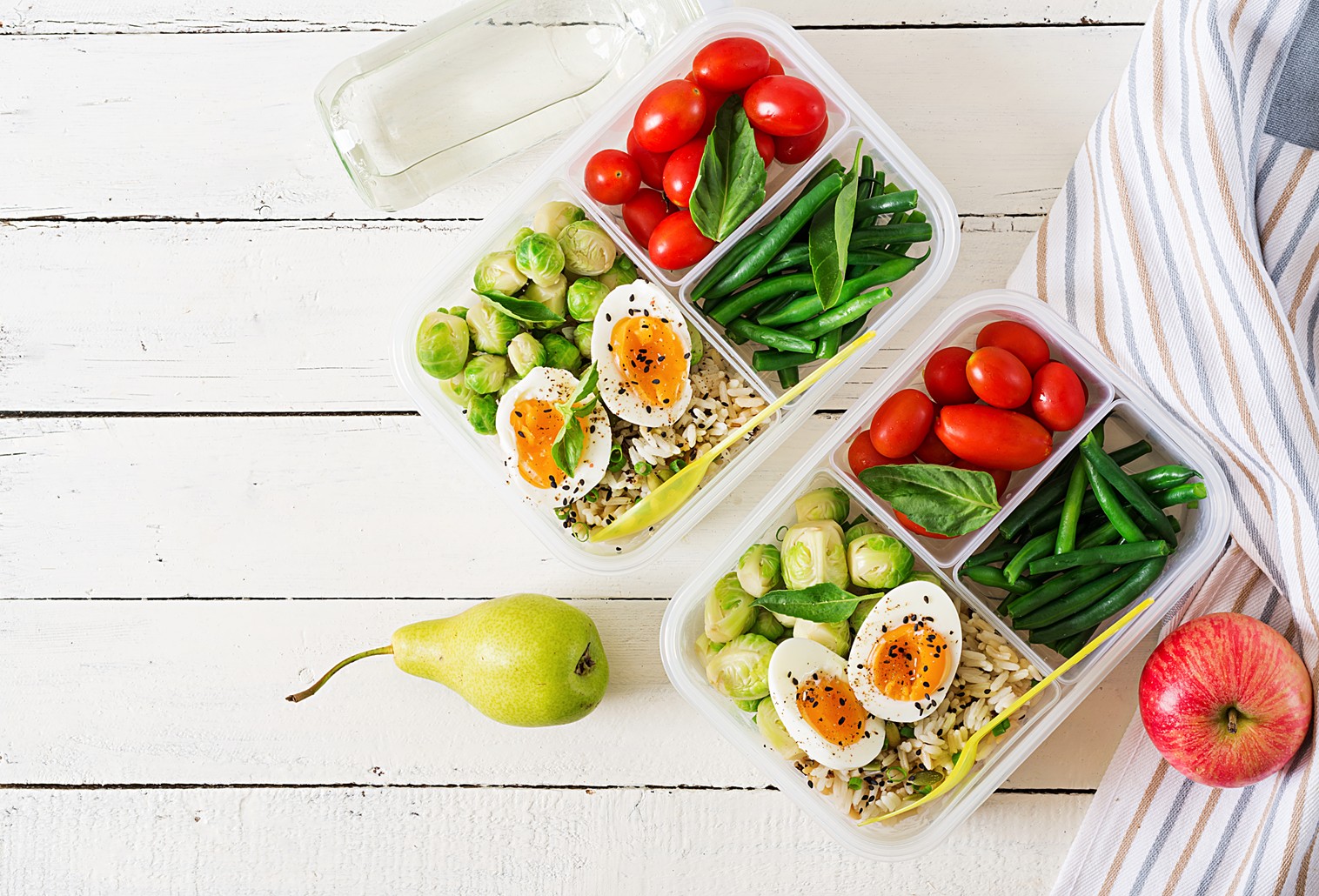
One time-saving tip for busy families is to batch-prep meals, and that can be as easy as picking up an extra carton of eggs from the local grocery store. Take some time on a day that isn’t as busy to prepare several dishes at once, making it easier to quickly have a nourishing meal on those hectic days ahead.
Look to eggs for an easy, healthy choice to boost the nutritional value of your meal. Many egg dishes can be cooked ahead and served throughout the week, such as tacos, egg stuffed pitas, egg casseroles, hard-boiled eggs and sandwiches.
Here’s another thing to think about: nearly half of an egg’s protein and most of its vitamins and minerals — including choline and antioxidants — are found in the yolk, so adding eggs to your meal rotation is a real no-brainer.1,8
Meal prep helps reduce decision fatigue and can help simplify days and alleviate stress,9 making it easier to eat healthy on even the busiest days. Eggs are incredibly versatile and can be cooked in bulk, such as hard-boiling a dozen or making a batch of egg bites at the beginning of the week.
Tip #3: Have fun meeting protein goals
Protein is an essential component to a healthy body. It helps build and maintain muscle, and along with regular exercise, can keep you strong.
One of nature’s most perfect proteins, each egg contains 6 grams of complete protein, including all nine essential amino acids in a bioavailable form.2 This makes them one of the highest-quality protein sources — so high that food scientists often use eggs as a standard to assess the protein quality of other foods.1 Eggs provide energy and key nutrients that support all the 600+ muscles in your body.1,10 And that’s a very good thing, because muscles are what allow you to stand, move and really do everything you love to do in life.
Here are some creative ways to increase protein intake with eggs:
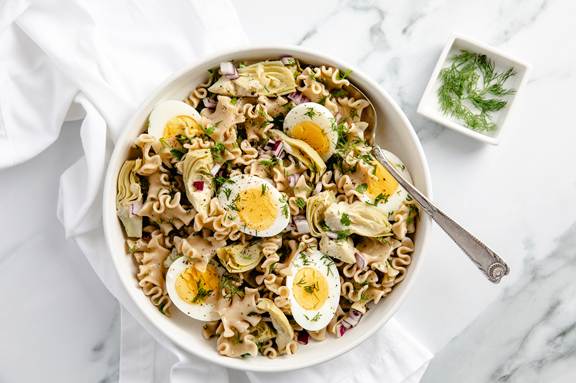
- Add hard-boiled eggs to salads or pasta for a protein boost
- Make a veggie-packed omelet for breakfast
- Incorporate eggs into a stir-fry or grain bowl
Maintaining muscle with regular physical activity and a healthy eating pattern can help support your metabolism, keep your weight in check and may also help to prevent disease.11-15
Tip #4: Bring fiber to the table
While fiber has been trending across social media, fiber consumption remains a significant public health concern.16 The data shows that approximately 90% of women and 97% of men do not meet the recommended daily fiber intake of 25g – 38g/day.17
As a favorite food and with ease of prep, eggs are an easy food to partner with fiber-rich ingredients like fruits, vegetables and whole grains. Try adding more vegetables, grains or shredded potatoes to your favorite egg dishes. Combining the fiber from these ingredients with the protein from eggs creates a delicious and filling meal. When life refuses to slow down, your nutrition routine doesn’t have to disappear with your free time. By keeping simple, nourishing staples on hand like eggs and following practical tips, you can fuel your body without adding stress to your schedule. Start small and let each smart choice in the kitchen move you one step closer to feeling your best, no matter how full your calendar may be.
References
- S. Department of Agriculture. FoodData Central SR Legacy — Egg, whole, raw, fresh. 2019 April 1, 2019; Available from: https://fdc.nal.usda.gov/food-details/171287/nutrients.
- Schaafsma G. The protein digestibility-corrected amino acid score. Nutr. 2000;130(7):1865S-7S.
- Isaac AR, Lima-Filho RAS, Lourenco MV. How does the skeletal muscle communicate with the brain in health and disease? Neuropharmacology. 2021;197:108744.
- S. Department of Health and Human Services. Physical Activity Guidelines for Americans, 2nd edition. Washington, DC: U.S. Department of Health and Human Services; 2018.
- National Institutes of Health. Choline: Fact Sheet for Health Professionals. 2021; Available from: https://ods.od.nih.gov/factsheets/Choline-HealthProfessional/.
- Wallace TC, et al. Choline: The underconsumed and underappreciated essential nutrient. Nutr. Today. 2018;53(6):240-253.
- Food and Nutrition Board and Institute of Medicine. Dietary Reference Intakes for Thiamin, Riboflavin, Niacin, Vitamin B6, Folate, Vitamin B12, Pantothenic Acid, Biotin, and Choline. 1998; Available from: https://www.ncbi.nlm.nih.gov/books/NBK114310/.
- S. Department of Agriculture. FoodData Central SR Legacy — Egg, yolk, raw, fresh. 2019; Available from: https://fdc.nal.usda.gov/food-details/172184/nutrients.
- Klein L, Parks K. Home meal preparation: Powerful medica intervention. Am J Lifestyle Med. 2020;14(3):282-285.6. Osdoba KE, Mann T, Redden JP, Vickers Z. Using food to reduce stress: Effects of choosing meal components and preparing a meal. Food Quality and Preference. 2015;39:241-250.
- American Egg Board’s Egg Nutrition Center. What We Eat in America. NHANES 2015-2018. 2022; Available from: Nutrient-Contribution-of-Eggs-to-the-American-Diet_21-November-2022.pdf
- Jäger R, et al. International Society of Sports Nutrition Position Stand: Protein and exercise. Int. Soc. Sports. Nutr. 2017;14:20.
- Leidy HJ et al. The role of protein in weight loss and maintenance. J. Clin. Nutr. 2015;101(6):1320s-1329s.
- Wolfe RR. The underappreciated role of muscle in health and disease. J. Clin. Nutr. 2006;84(3):475-82.
- S. Department of Agriculture and U.S. Department of Health and Human Services. Dietary Guidelines for Americans, 2020-2025. 9th Edition. December 2020. Available at DietaryGuidelines.gov.
- S. Department of Health and Human Services. Physical Activity Guidelines for Americans, 2nd edition. Washington, DC: U.S. Department of Health and Human Services; 2018.
- Dietary Guidelines Advisory Committee. Scientific Report of the 2020 Dietary Guidelines Advisory Committee: Advisory Report to the Secretary of Agriculture and the Secretary of Health and Human Services. 2020; Available from: https://www.dietaryguidelines.gov/sites/default/files/2020-07/ScientificReport_of_the_2020DietaryGuidelinesAdvisoryCommittee_first-print.pdf.
- Lai S, Zeng Y, Lin G, Li Y, Lin Z, Ouyang X. Association between dietary fiber intake and obesity in US adults: from NHANES 1999-2018. Front Nutr. 2025 Jul 7;12:1602600. doi: 10.3389/fnut.2025.1602600. PMID: 40693201; PMCID: PMC12277132.