

Eggs deliver high-quality protein and important nutrients in a simple, satisfying food.
Why Eggs Make Sense on a GLP-1
A smaller appetite does not make good nutrition any less important. When you are taking a GLP-1, choosing nutrient-dense foods can help you get valuable nutrition from every bite. That makes real foods that offer high-quality protein and important nutrients especially valuable.
Eggs deliver both in one simple, satisfying food. They are minimally processed, versatile and easy to work into breakfast, lunch, dinner or a smaller meal whenever you are ready to eat.
Real Food. Powerful Nutrition.
On a GLP-1, the food you choose needs to deliver. Here is what eggs bring to every bite.
High-quality protein in every egg. Each egg provides 6 grams of complete, high-quality protein, including all nine essential amino acids. When a GLP-1 makes your appetite smaller, eggs help make every bite count.
Nutrient-dense by nature. Eggs provide beneficial nutrients without added sugar or sodium, making them a smart choice when nutrient density matters.
Minimally processed and easy to prepare. Scramble one in the microwave, keep hard-boiled eggs ready in the refrigerator or add eggs to vegetables for a simple meal.
Don’t skip the yolk. Nearly all the vitamins and minerals in an egg are found in the yolk. The whole egg delivers high-quality protein and important nutrients in one naturally compact package.
Real Food for Any Time of Day
Eggs are a versatile, real-food solution for every time of day, including for those taking a GLP-1. With high-quality protein and important nutrients, eggs make it easier to create satisfying meals and snacks that help every bite work harder. Whether you need something ready in minutes, a meal you can save for later or even something sweet, these recipes offer simple, delicious ways to put eggs on the menu.

Three eggs, whole-grain bread, avocado and tomato come together in one pan for a satisfying meal with 33 grams of protein.

Real food can include something sweet, too. Made with hard-boiled eggs blended into a rich chocolate mousse, this unexpected dessert proves eggs can bring nutrition and indulgence together.

Filled with scrambled eggs, colorful vegetables and cheese, these easy roll-ups provide 15 grams of protein each. Make a batch, freeze them and reheat one whenever you need a simple meal.Eggs deliver high-quality protein and important nutrients in a simple, satisfying food.

Eggs, roasted sweet potatoes and colorful vegetables make this sheet-pan hash a balanced option any time of day.

With 23 grams of protein per serving, this pizza is a fun, family-friendly option that works for any meal.
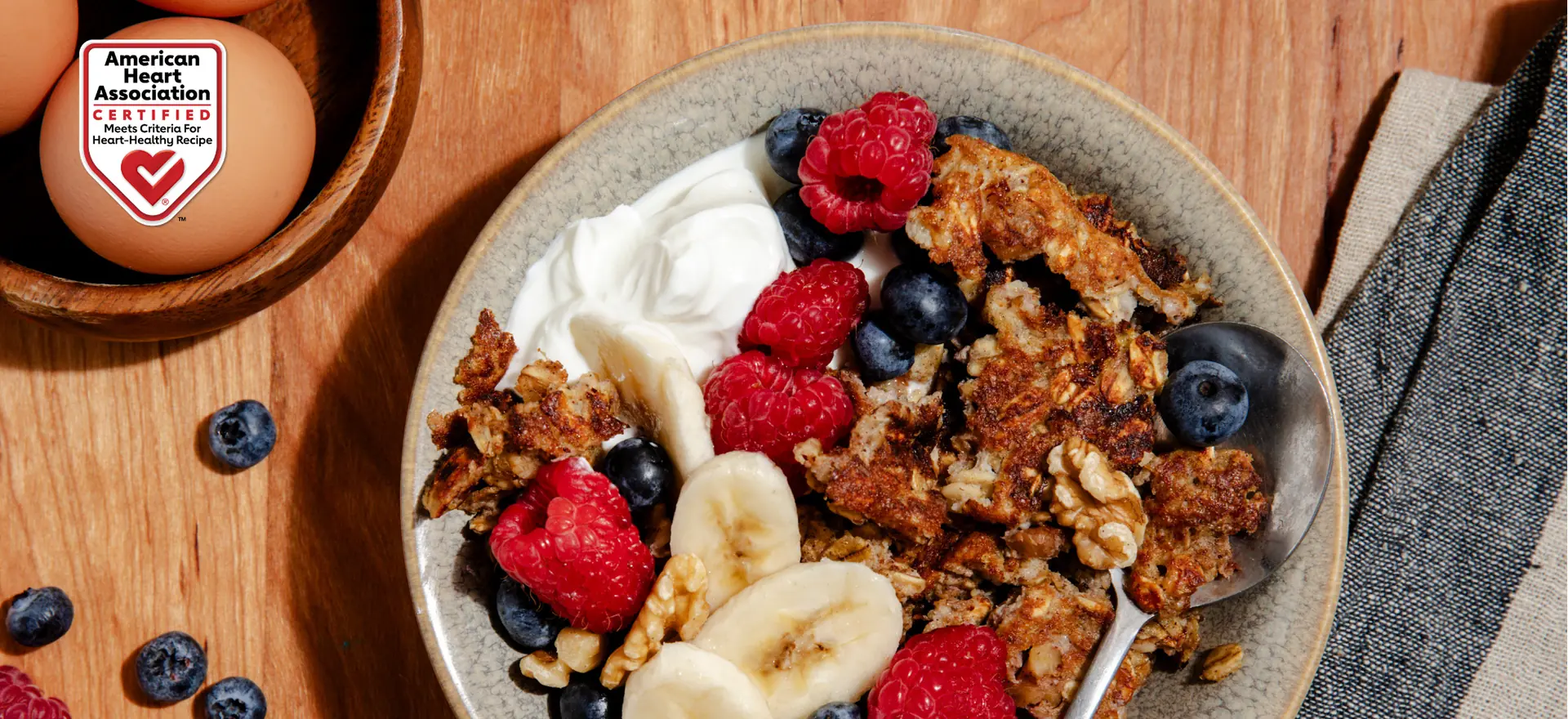
Eggs, oats, banana and walnuts put a satisfying spin on breakfast, delivering 19 grams of protein in a simple meal ready in about 12 minutes.
Need More Reasons to Reach for Eggs?
There is even more to the egg nutrition story. Explore the latest research and learn how eggs can support a healthy lifestyle from head to toe.
A Strong Case for Eating Eggs
Discover how high-quality protein, choline and other nutrients in eggs can support the body and mind. Explore the role eggs can play in physical, cognitive and overall well-being.
Read More →Two Eggs Can Fit into a Heart-Healthy Diet
See what recent research found about eating two eggs daily as part of a diet low in saturated fat.
Read More →Study Links Egg Consumption to Lower Alzheimer’s Risk
A recent study found that adults 65 and older who ate eggs regularly had a lower risk of being diagnosed with Alzheimer’s disease.
Read More →Nutritious Dinners That Stretch Your Grocery Budget
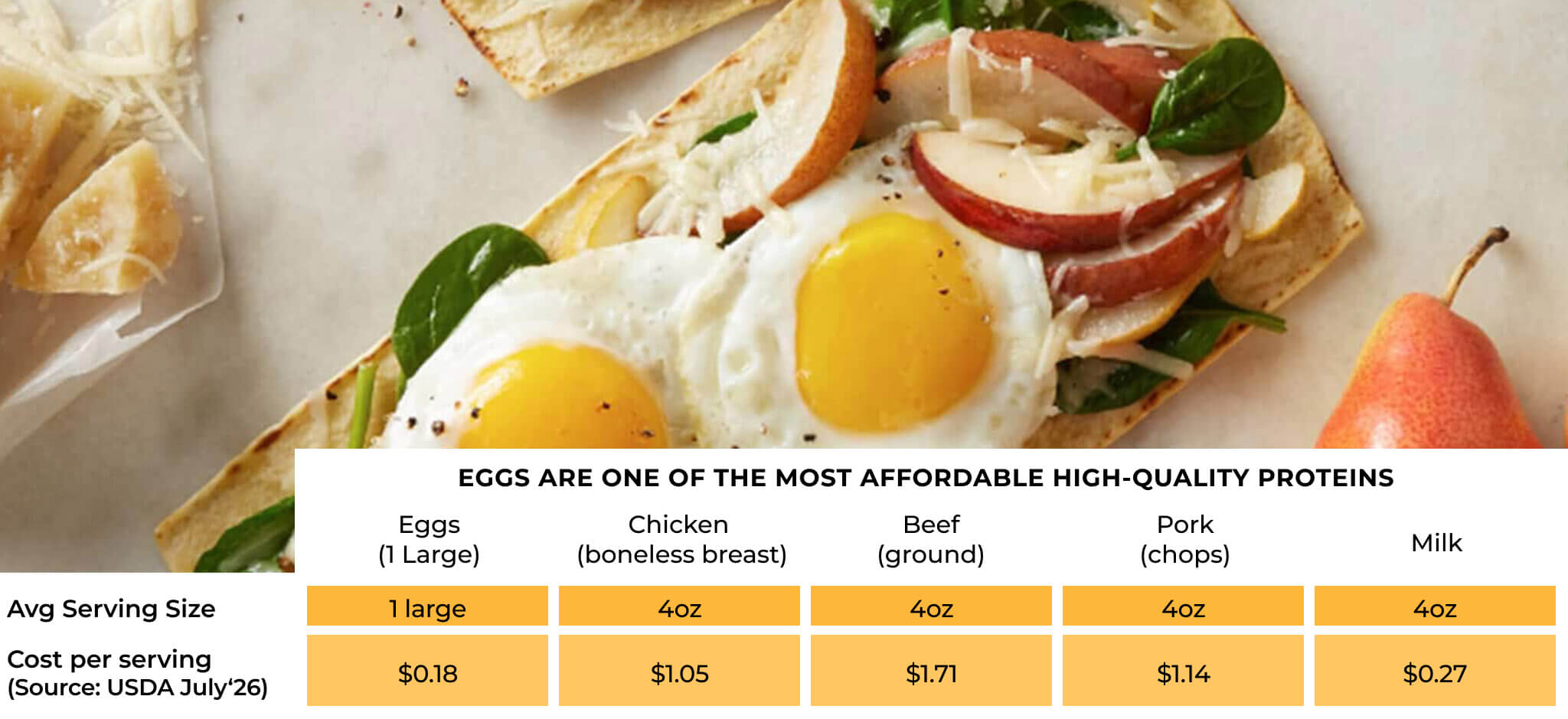
Eggs make it easier to build nutritious, satisfying meals while helping your grocery budget go further. Explore a dozen egg-forward dinner ideas that put real food on the table without overcomplicating mealtime.
Healthy Eating Can Still Be Simple
Taking a GLP-1 may change how much you eat, but your body still needs nourishment. Eggs offer high-quality protein and important nutrients in a versatile food that can fit into breakfast, lunch, dinner or a smaller meal.
Make every bite count with eggs.
References
- Mozaffarian D, et al. Nutritional Priorities to Support GLP-1 Therapy for Obesity: A Joint Advisory. American Journal of Clinical Nutrition. 2025;122(1):344–367. Full article
- U.S. Department of Agriculture, Agricultural Research Service. FoodData Central. Egg, whole, raw, fresh. FDC ID 171287. 2019. USDA FoodData Central
- Schaafsma G. The Protein Digestibility-Corrected Amino Acid Score. Journal of Nutrition. 2000;130(7):1865S–1867S. PubMed
- U.S. Department of Agriculture, Agricultural Research Service. FoodData Central. Egg, white, raw, fresh. FDC ID 172183. 2019. USDA FoodData Central
- American Egg Board. One-Pan Egg Sandwich. Nutrition information: 33 grams protein per serving.
- American Egg Board. Cheesy Veggie Egg Roll-Up. Nutrition information: 15 grams protein per serving.
- American Egg Board. Sweet Potato & Egg Hash.
- American Egg Board. Hawaiian Scrambled Egg Pizza. Nutrition information: 23 grams protein per serving.
- Carter S, et al. Impact of Dietary Cholesterol From Eggs and Saturated Fat on LDL Cholesterol Levels: A Randomized Cross-Over Study. American Journal of Clinical Nutrition. 2025. See the AEB research summary.
- Oh J, et al. Egg Intake and the Incidence of Alzheimer’s Disease in the Adventist Health Study-2 Cohort Linked With Medicare Data. Journal of Nutrition. 2026;156(6):101541. PubMed